Mechanical Repairs & Troubleshooting On Diesel Engines, School Buses and Related Operating Systems.
Thursday, June 18, 2015
Cat 3116 Rear Seal Installer For Sale
I got a new price from CAT and they said $500.00 Canadian funds
This tool is used so we will sell it for $125.00 U.S. + Freight
Leave a comment below with your contact information.
I have a post on this blog that demonstrates how this tool works. Check it out HERE
Wednesday, June 17, 2015
Cat 3116 Fuel Solenoid For Sale
This fuel solenoid is new...never used out of the box. The last price that we had on it was $355.00 Canadian.
We will sell if for $100.00 U.S. plus freight. Contact me in the comments section below and let me know if you're interested along with your email address. I'll give the first response priority.
These solenoids are activated with the key on and the winding pulls in the piston to turn fuel linkage on in the governor housing. They screw in and are sealed by an o-ring.
Here is more information regarding the Cat 3116 solenoid on a previous post. There you will find torque specs and operational details.
Check out this link which leads to all of the Cat 3116 related posts on this blog.
Thanks for the visit ... please comment and share this post.
Wednesday, April 06, 2011
School Bus Engine Rebuild Video Cat 3116
The whole works rolls right into the frame. Thankfully Thomas Bus allows the rear end frame to be removed. The Cat 3116 is a fussy engine to set up and you MUST have the Cat tool kit. There is no way to set up the timing, synchronization & fuel setting without the kit.
The valve train is the only weak spot on these engines, when they get too hot (in this case) the exhaust valve let loose requiring the major repair including a new cylinder head. Too avoid this keep the engine temperature down and check valve adjustment every 30,000 to 40,000 km (18-24,000 Miles). Enjoy the video....Please Leave a Comment
School Bus Mechanic Pictures..Exclusive! by jelletse
Wednesday, December 22, 2010
How To Set Valves & Injectors - Cat 3116 Diesel Engine
Today I am going to show you how to adjust the valves and injectors on a Caterpillar 3116 Diesel Engine. The injectors are mechanical and are checked and adjusted manually using the appropriate Caterpillar tune-up tools.
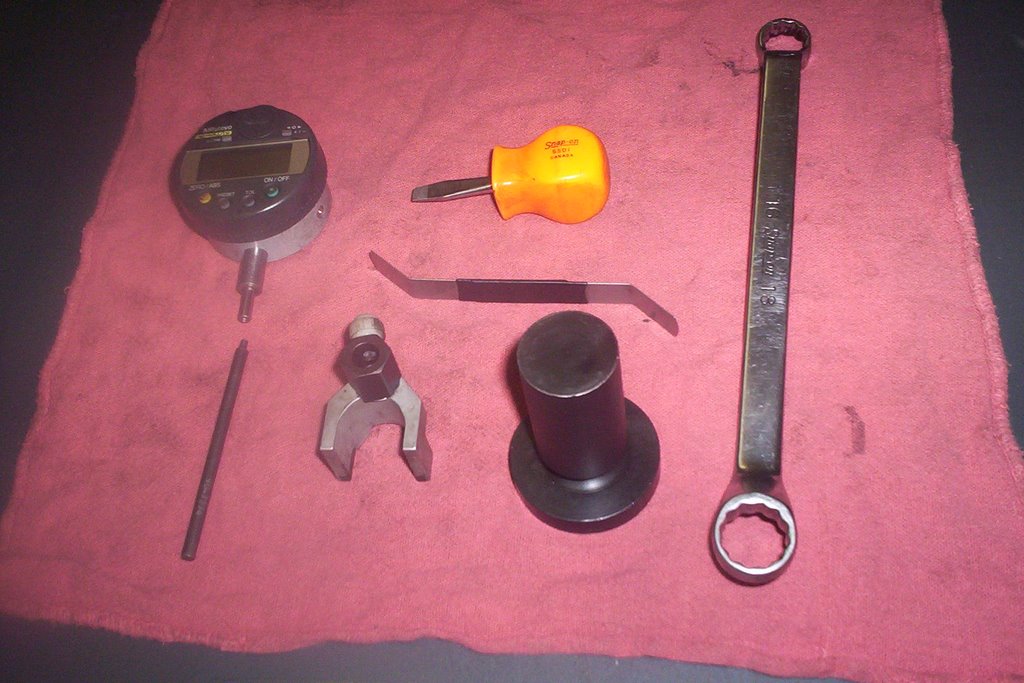
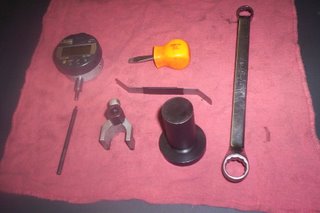
Here are the tools needed to perform the valve and injector adjustment:
Caterpillar Part #'s
*Dial Indicator # 1U-8869
*Contact Point # 9U-7274
*Feeler Guage # 123-4941
*16mm/18mm Drop Wrench # 128-8824
* Timing Guage Block # 9U-7269
Magnetic Base # 123-4940
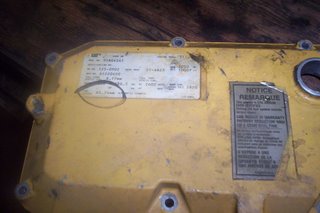
Setting the valves and injectors is a preventive maintenance operation and should be done on a regular basis. Once you get through one setting it's a cakewalk the second time around. Below is the dataplate that tells you the timing specification for setting injectors.
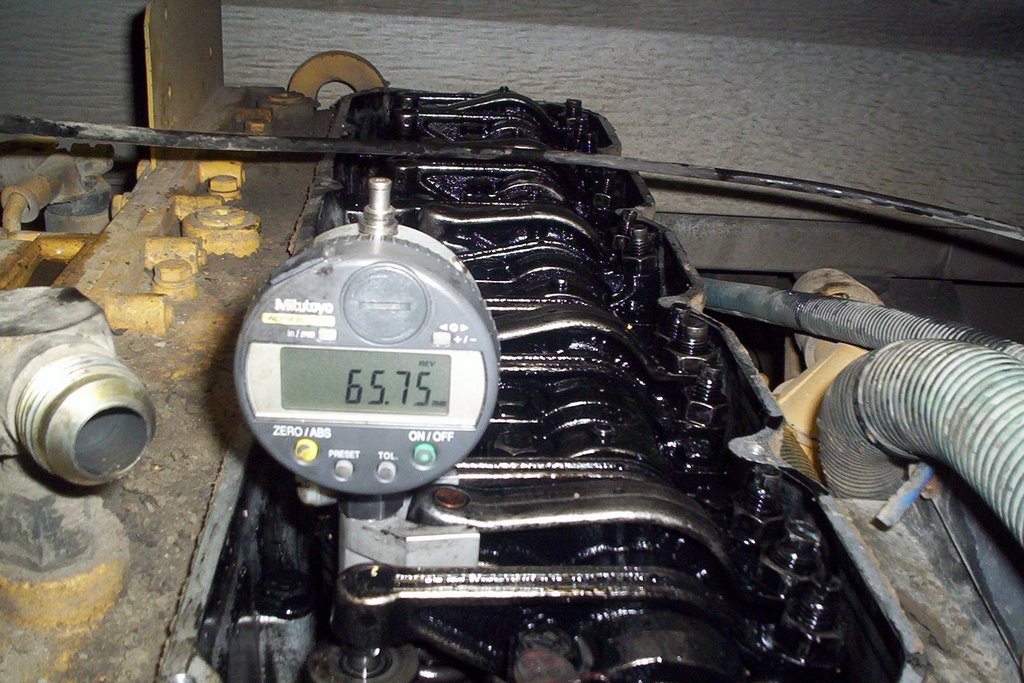
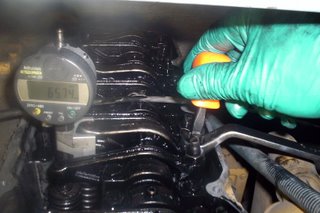
The dial indicator has to be pre-set so it reads 62.00 mm when placed on the timing guage block as shown below. These tools come with the complete Caterpillar tune-up kit with detailed instructions included.
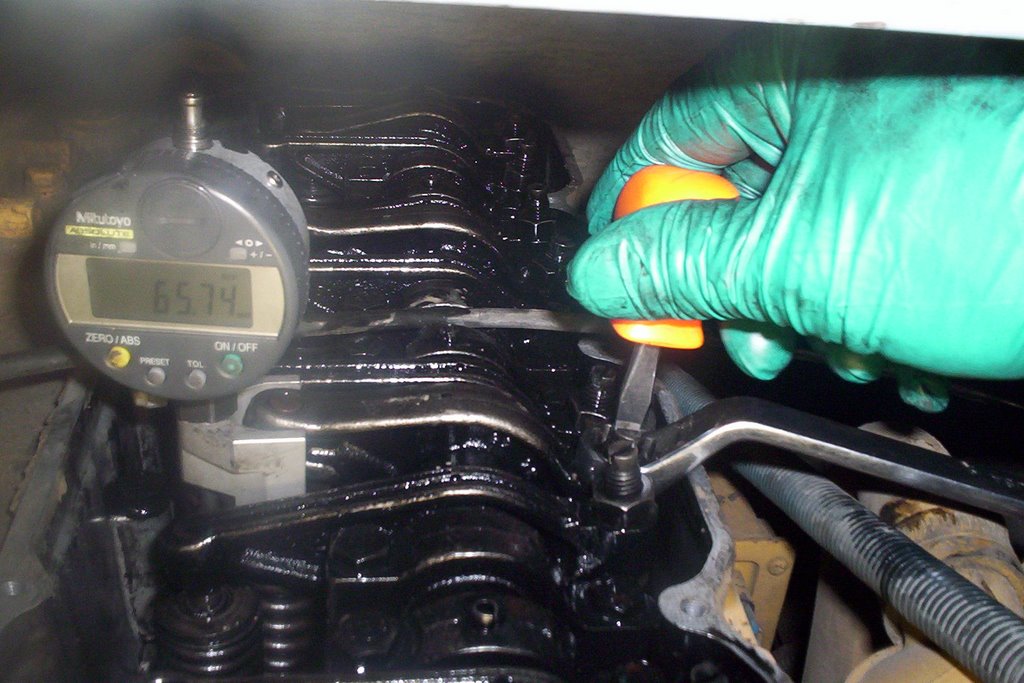
The first thing to do is rotate the engine over until # 6 cylinder valve rockers are rocking. Watch # 6 valve rockers as you are rotating the engine, keep turning the engine until the exhaust valve closes and the intake valve JUST starts to open. Stop there, # 1 cylinder is now on the Compression Stroke and ready for valve adjustment as well as the other designated injectors and valves. *Adjust 3-5-6 injectors to timing spec. / in this case 65.74 mm / + or - .020 mm
*Adjust 1-2-4 intake valves .015 in.
*Adjust 1-3-5 exhaust valves .025 in.
Rotate engine over 360 degrees and adjust the other remaining valves and injectors. # 6 cylinder is now on compression stroke since #1 and # 6 pistons are always at TDC [top dead center]together.
*Adjust 1-2-4 injectors
*Adjust 3-5-6 intake valves
*Adjust 2-4-6 exhaust valves
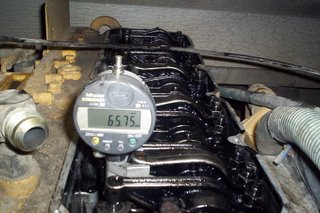
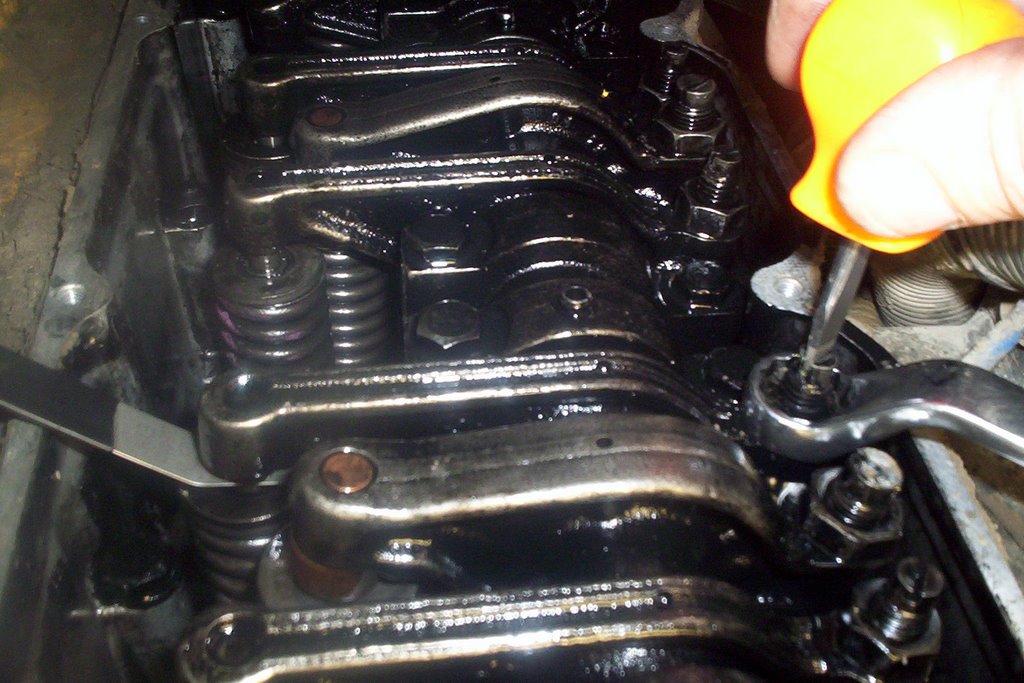
As you can see from the above picture the magnetic dial indicator holder sits on top of the injector. The dial indicator measures the distance from the top of the injector to the machined body surface at the bottom which must be set correctly. This dimension effects injection timing and can be adjusted at the injector rocker arm set screw.
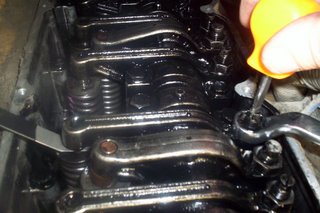
I hope this post helps out all you Cat 3116 owners. The valve and injector adjustment is probably the most crucial as adjustment can change with normal wear and tear as your diesel engine racks up the mileage.
That's all for now, thanks for visiting and be sure to check back for more Diesel Mechanic Tips.
Saturday, October 10, 2009
Cat 3116 Diesel Engines
I've been getting a lot of questions on 3116 Cat Diesel Engine problems. The one stumbling block is the tooling you need to repair these model engines. After the basics like fuel supply and electrical issues are taken care of the next step is replacing injectors and other related tasks.The tools required for tuning up these engines come in a kit and costs over $2000.00 in my part of the world. These tools must be used to get this engine synchronized, timed and set up properly.
If you have access to the tools that's great, a manual accompanies the kit. There is a learning curve with setting up the 3116 but do it once and you'll understand the concepts behind the injection system.

There are glitches with the 3116 are usually the same and I have posted them as they happened on this blog. The exhaust valves are weak and it seems like #5 exhaust valve is a weak spot. Keeping the valves set is a good practice and prevents a tight valve and overheating.
If you use the search box above you can get more details on tune ups and repairs. There are specific rebuild procedures covered as well.
Or you can check all the posts out here:
http://schoolbusmechanic.blogspot.com/search?q=cat+3116
You might have to be more specific with your search i.e "cat 3116 oil pump"
You can always make a comment or ask a question and I will get back to you...
Thursday, July 09, 2009
Cat 3116 Troubleshooting No Power
One thing that seemed curious was the rpms in neutral went to the maximum without any problem but as soon as you put a load on the engine the rpms stayed at around 1200 rpm with no torque at all.
The Cat 3116 Governor controls the fuel rack which in turn decides how much fuel to allow to the injectors according to engine load and speed. The operator controls the throttle and the load is read off of the turbo boost pressure. The boost line goes directly to the governor air fuel ratio control. The more boost, the governor moves the rack for more fuel.
I tested the air/fuel ratio diaphragm with a regulator on the bus and it was leaking into the housing meaning the diaphragm had failed. Once I replaced the diaphragm it was a no-brainer to retest the new assembly and check for leaks. The new diaphragm was holding nicely.
NOTE: Don't test diaphragm over 20 psi
Here is a picture of the old diaphragm with a split in it. I remember the red flag that popped into my head when I called the Cat dealer for this part and they had 3 diaphragms on the shelf. Perhaps a recurring problem?
The 3 allen head screws are removed to pull the cover off to replace the diaphragm. This is an easy procedure once the governor is removed from the engine.
The governor linkage must be unhooked from the fuel rack before removing. Here you can see the pin which slides into the linkage and secured with a C clip.
The governor does not have to be timed and is fastened to the engine with 3 m8 bolts. Not much to it once all the fuel lines and piping is removed. This was a case of a smooth No Power situation. There was no white or black smoke, the engine did not miss or do anything really obvious. Testing the diaphragm with the air regulator is just another way for a diesel mechanic to troubleshoot a Cat 3116 Diesel Engine.Friday, February 01, 2008
Cat 3116 Engine-Repairing Common Engine Oil Leak
The Cat 3116 Engine has a common oil leak that is very easy to fix. The first step is to remove the steering pump which is driven off the air compressor. The next step is to remove the rear housing from the air compressor, it's held on with 4 nuts on studs, there is a square o-ring that seals the rear housing to the main compressor body. The Compressor is a "Bendix 850 Model" which is a 2 stage [2 cylinder] unit.
The Cat 3116 Engine oil pressure guage and air compressor oil feed lines run off the housing pictured here bolted to the engine block which is connected to the main oil pressure gallery. There is an o-ring seal between this housing and the engine block.
This 2nd block is the air compressor rear support block that has an o-ring seal as well. This block also serves as an oil drain for the 3126 model which has a oil pump above that supplies high pressure oil to the HEUI system [Hydraulic Electronic Unit Injectors].
Pictured here is the oil pressure manifold housing removed. The heat is absorbed by these 2 o-rings and they become very brittle causing an oil leak. Diesel Engines run from the "heat of Compression" so you can bet the engine block is smokin' hot! when operating temperatures are met.
The manifold housing o-ring has been replaced and is secured with 2 M8 Metric bolts. These 2 areas are a common oil leak in both the Cat 3116 Engine & 3126 Diesel Engine .Recommended: Diesel Engine Repair Manuals
Wednesday, December 19, 2007
Cat 3116 Engine Installation-Thomas Buses

Sunday, November 18, 2007
Cat 3116 Engine Synchronization Video Tutorial
Below is Step One:
Calibrating #1 Injector
Step Two:
Setting Up For Injector Synchronization
Step Three:
How To Adjust Injector Synchronization
This is the hardest step to get around {especially for the first time} but comes much easier with repetition. The Cat 3116 Diesel Engine is a fussy engine to tune up but it pays you back with great performance.